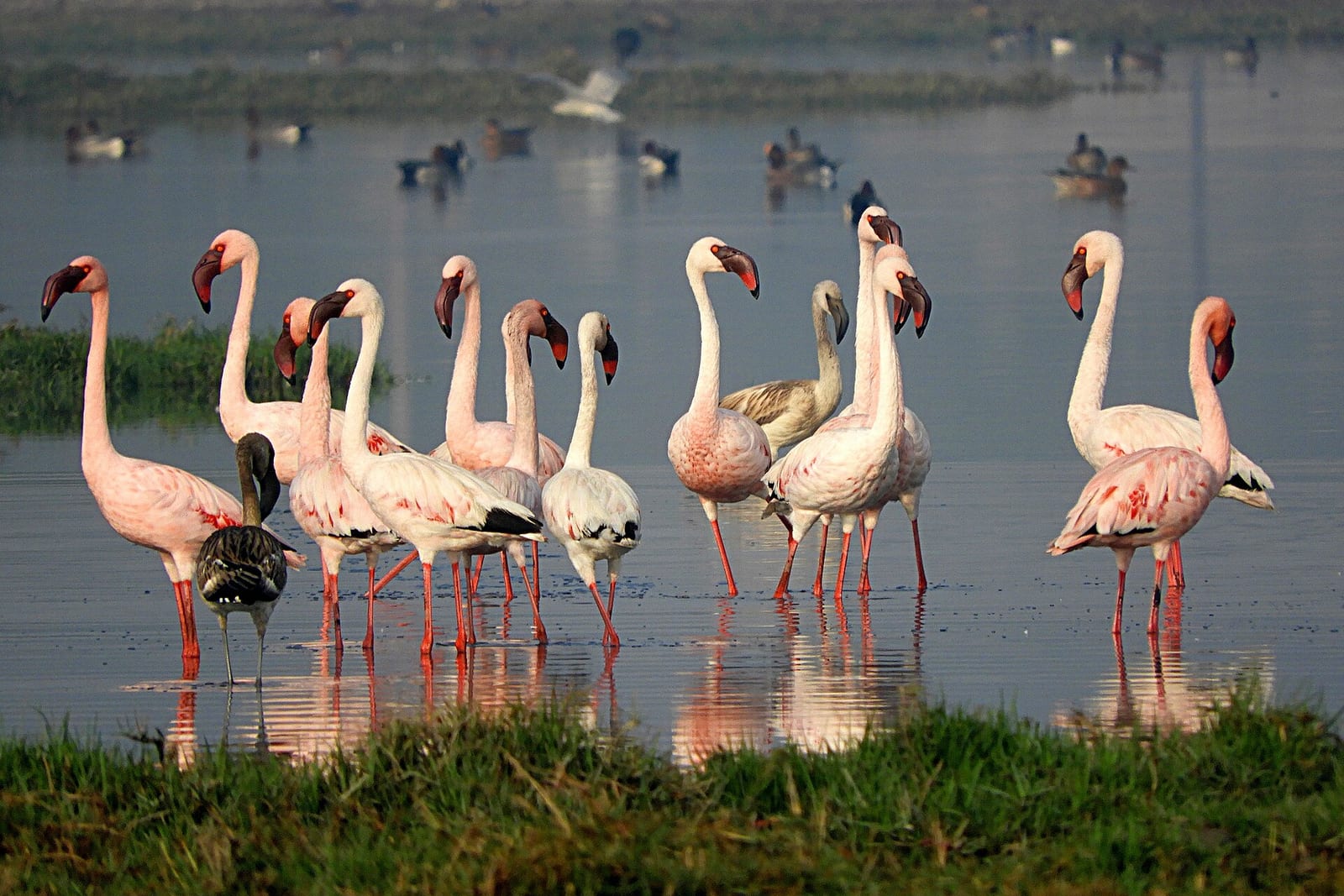
When conditions align, Kenya stages the greatest bird spectacle on Earth: a Rift Valley soda lake carpeted shore to shore in lesser flamingos — a million heat-shimmered pink bodies honking like distant traffic. The colour is diet made visible: pigments from the blue-green algae that only these caustic lakes grow.
The flocks chase algae blooms between Lakes Bogoria, Nakuru, Elmenteita and Magadi on no fixed schedule; since rising waters diluted Nakuru’s chemistry in the 2010s, Bogoria — hot springs steaming along its shore — has hosted the mega-gatherings most reliably. Greater flamingos, taller and paler, stalk the same shallows filtering invertebrates.
Where to see flamingos in Kenya
Lake Bogoria (national reserve, 90 minutes north of Nakuru) is today’s most reliable mega-flock site; Nakuru varies year to year; Elmenteita and Magadi hold shifting flocks; Amboseli’s seasonal floods draw surprise gatherings.
Lake Nakuru
The rhino sanctuary on the pink lake
Amboseli
Giants beneath Kilimanjaro
Best time: Any month can peak — flocks follow algae, not calendars. Dry seasons concentrate birds as lakes shrink; local reports beat all planning.
Flamingo: frequently asked questions
Why did the flamingos leave Lake Nakuru?
Rising lake levels after 2013 diluted the alkalinity that grew their algae, so the flocks shifted — chiefly to Lake Bogoria. Nakuru still hosts thousands when chemistry swings back; the rhinos, giraffe and lions never left.
Are flamingos born pink?
Grey — the pink is pay-as-you-eat, built from algae pigments over years. Zoo flamingos fade without supplemented diets; Bogoria’s wild flocks run the full crimson spectrum by age.
Where do Kenya’s flamingos breed?
Almost all of East Africa’s lesser flamingos breed on the blistering soda flats of Lake Natron, just over the Tanzanian border — then commute to Kenya’s lakes to feed. Protecting that single site protects the entire spectacle.