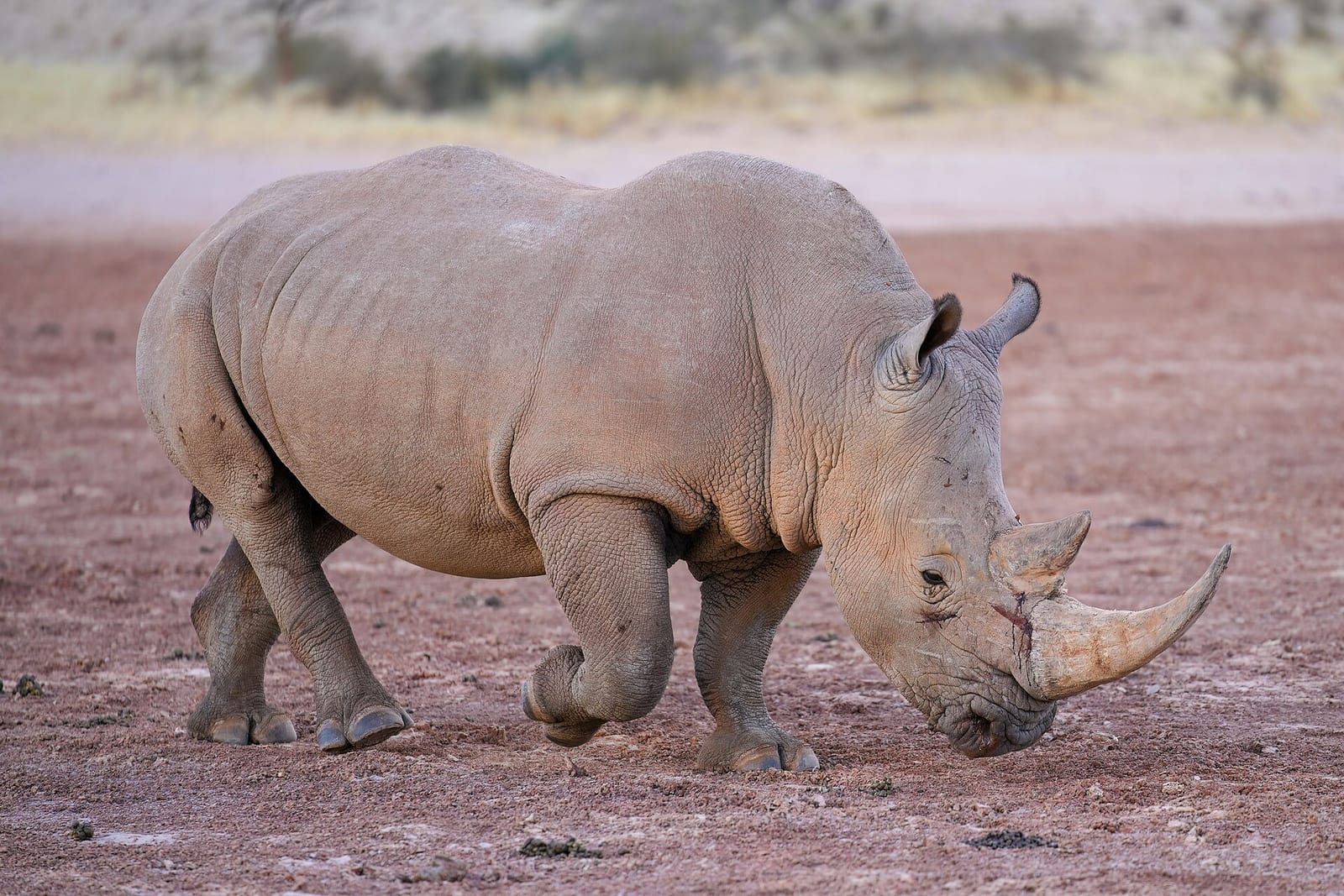
No animal carries the poaching war’s scars like the rhino, and no country has fought harder for them than Kenya. From a low of under 400 black rhinos in the late 1980s (down from 20,000 twenty years earlier), Kenya has rebuilt its population to over 1,000 black and nearly 1,000 southern white rhinos — guarded in fenced sanctuaries by rangers who know each animal by name.
For visitors this means something unusual: in the right parks, rhino sightings are not luck but near-certainty. Lake Nakuru’s lakeshore meadows, Nairobi National Park’s skyline plains and Laikipia’s Ol Pejeta Conservancy (home also to the world’s last two northern white rhinos) offer the most moving big-game encounters in Africa — animals that exist because people refused to let them go.
Where to see rhinoceross in Kenya
Lake Nakuru and Nairobi NP for near-certain white rhino sightings; Tsavo West’s Ngulia and Meru’s sanctuary for black rhino; the Mara Triangle holds the Mara’s remnant black rhino. Ol Pejeta Conservancy (Laikipia) is the single best rhino destination in East Africa.
Lake Nakuru
The rhino sanctuary on the pink lake
Nairobi NP
Lions with a skyline
Tsavo West
Land of lava, springs and long views
Meru
Where Elsa walked free
Aberdare
Kenya’s misty mountain kingdom
Masai Mara
The greatest wildlife arena on Earth
Best time: Year-round in the sanctuaries. White rhino graze in the open through the morning; black rhino browse thicket edges at dawn and dusk and demand more patience.
Rhinoceros: frequently asked questions
What is the difference between black and white rhinos?
Not colour — both are grey. White rhinos are bigger grazers with wide square lips (“white” garbles the Dutch wijd, wide); black rhinos are smaller, shyer browsers with a hooked, prehensile lip for pulling twigs. Kenya protects both.
Where will I most reliably see a rhino in Kenya?
Lake Nakuru National Park for white rhino, often within your first hour; Nairobi National Park runs it close. For black rhino, Ol Pejeta Conservancy in Laikipia gives the best odds in East Africa.
What are the last northern white rhinos?
Najin and Fatu, mother and daughter, live under 24-hour armed guard at Ol Pejeta — the final two of their subspecies. Scientists are attempting IVF using stored genetic material to bring the lineage back; visiting them is safari’s most sobering appointment.
Why are rhinos poached?
For horn — keratin, medically worthless — driven by demand in parts of Asia as status and pseudo-medicine. A kilogram has traded above gold’s price, which is why Kenya’s rhinos live in fenced, patrolled sanctuaries with dehorning debated case by case.