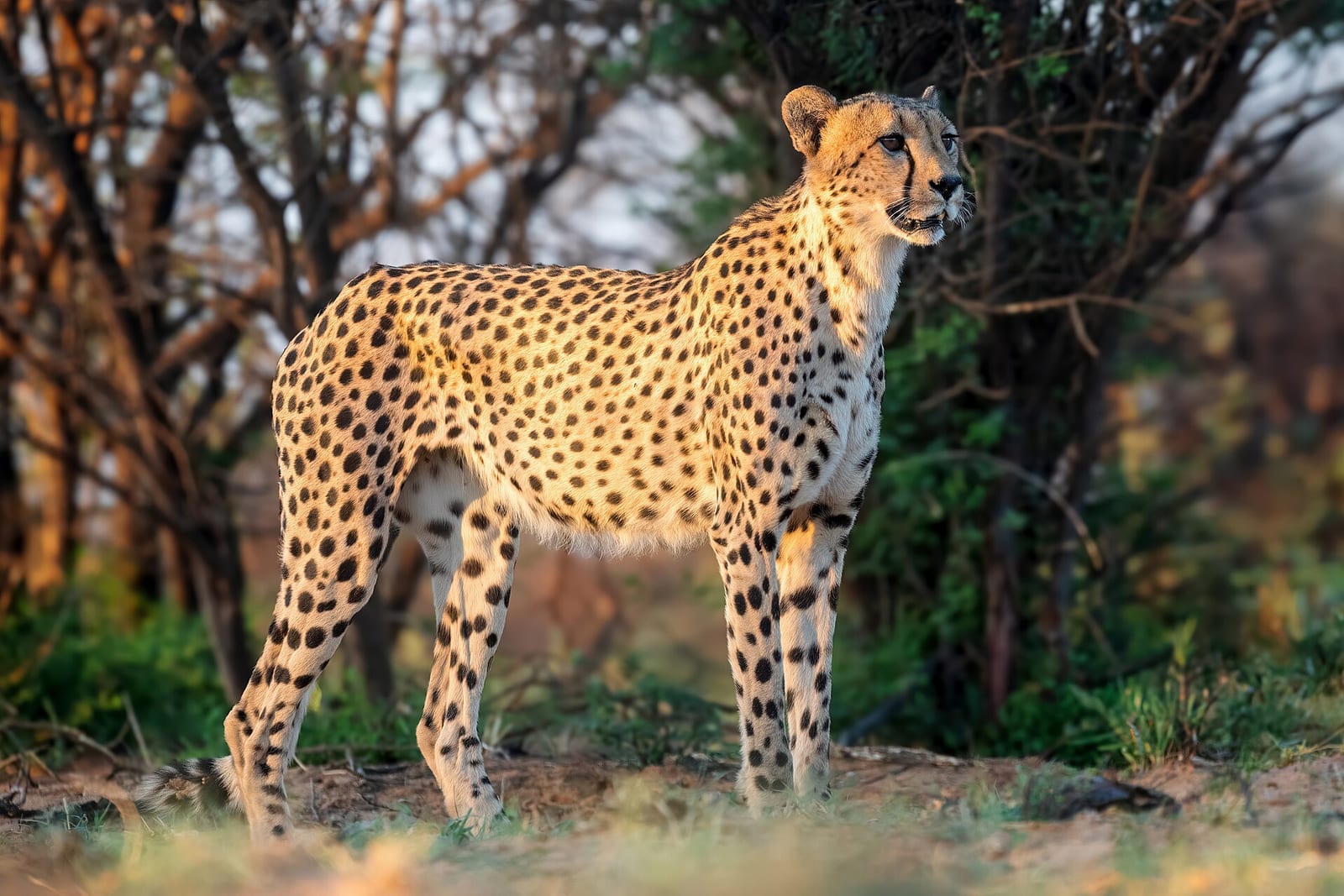
The cheetah is the safari-goer’s ally among big cats: it hunts by day, on open ground, in plain sight. The Masai Mara’s short-grass plains are its ideal stage, and the ecosystem’s cheetahs — including the celebrated coalitions of males that once hunted five-strong — are the most filmed on Earth.
Watching a hunt is sport’s ultimate highlight reel: the low stalk, the explosive 0–100 km/h in three seconds, the tripping forepaw at full stretch. It is also fragile. Cheetahs lose kills to every larger carnivore, and cubs face brutal odds — which is why the conservancies’ controlled vehicle numbers matter: crowding a hunting cheetah can cost it its meal.
Where to see cheetahs in Kenya
The Mara and its conservancies are Africa’s premier cheetah theatre; Amboseli’s and Tsavo East’s open country hold strong populations.
Masai Mara
The greatest wildlife arena on Earth
Amboseli
Giants beneath Kilimanjaro
Tsavo East
Red elephants and infinite horizons
Meru
Where Elsa walked free
Samburu
Wild north, different animals
Best time: Year-round on the Mara plains; gazelle-fawning seasons and the migration’s arrival of young animals concentrate hunting action. Mid-morning, after lions retire, is classic cheetah time.
Cheetah: frequently asked questions
Where is the best place to see a cheetah hunt?
The short-grass plains of the Masai Mara ecosystem — especially the conservancies, where vehicle limits mean a hunting female is not mobbed. Patient hours with one cheetah beat racing between sightings.
How fast is a cheetah really?
Reliable measurements top out around 100–110 km/h, sustained only for a few hundred metres — a drag racer, not a marathoner. Most chases are decided in under 30 seconds, and half fail.
Why do cheetahs climb on safari vehicles?
Termite mounds with engines: a bonnet is a high vantage for scanning prey. The Mara’s famous vehicle-hopping cheetahs learned it from their mothers. Charming, but guides now discourage it — habituation risks the cats’ wildness.