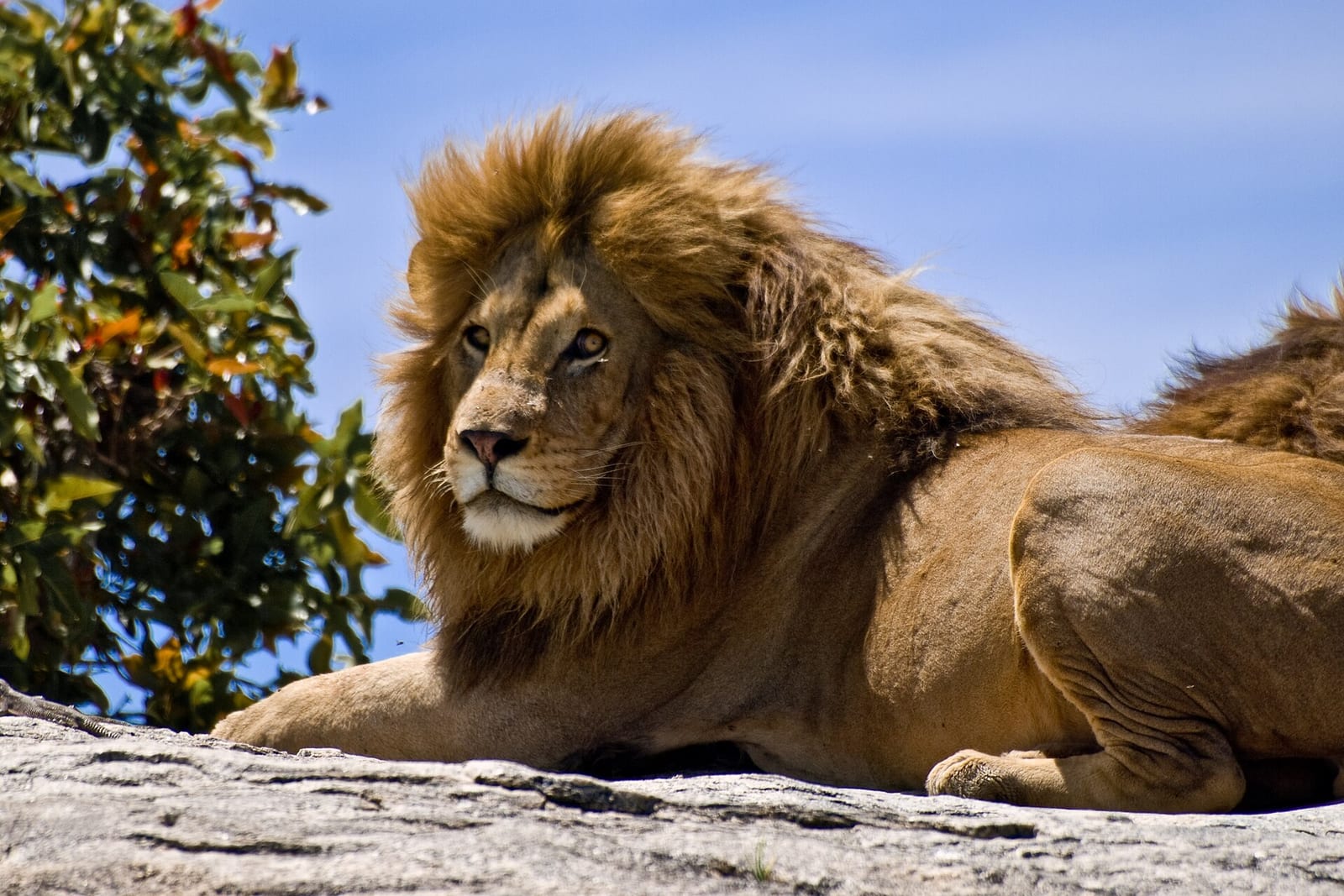
No sound places you in Africa like a lion’s roar rolling across the dark — audible eight kilometres away. Kenya remains one of the world’s great lion strongholds, and the Masai Mara ecosystem holds some of the highest densities ever recorded: big, black-maned males and prides more than twenty strong living entirely in the open.
Kenya’s lion story is also a conservation fight. Around 2,500 lions remain in the country, pressured by shrinking range and livestock conflict; the conservancy movement around the Mara — where Maasai landowners earn more from lion tourism than lions cost them — is one of Africa’s genuine success stories, and the reason sightings there feel almost guaranteed.
Where to see lions in Kenya
The Mara and its conservancies are the surest lion viewing on Earth; Nairobi National Park delivers remarkable sightings minutes from the capital; Tsavo’s maneless males carry the man-eater legend.
Masai Mara
The greatest wildlife arena on Earth
Amboseli
Giants beneath Kilimanjaro
Tsavo East
Red elephants and infinite horizons
Nairobi NP
Lions with a skyline
Meru
Where Elsa walked free
Samburu
Wild north, different animals
Best time: Year-round. Dry seasons shorten the grass and concentrate prey; migration season (Jul–Oct) turns the Mara into a lion banquet. Early morning is prime — lions hunt by night and are still active at dawn.
Lion: frequently asked questions
Where are you most likely to see lions in Kenya?
The Masai Mara and its conservancies, without serious rivalry — resident prides are habituated, visible and studied. A typical three-night Mara stay yields multiple sightings, often including cubs.
Why do Tsavo lions have no manes?
Tsavo’s males typically grow little or no mane — likely an adaptation to heat and dense thornbush, possibly linked to the ecosystem’s distinct genetics. It gives them their notoriously imposing, ancient look.
Are lion numbers going up or down in Kenya?
Nationally lions remain under pressure, but monitored populations in the Mara conservancies and Laikipia have grown — proof that when communities benefit from lions, lions survive. Kenya’s national lion census (the first ever, 2021) counted about 2,500.
Is it safe to watch lions from an open vehicle?
Yes — lions read the vehicle as one large, uninteresting object. The rules: stay seated, keep arms in, never stand or break the outline. Guides position respectfully and sightings stay calm.