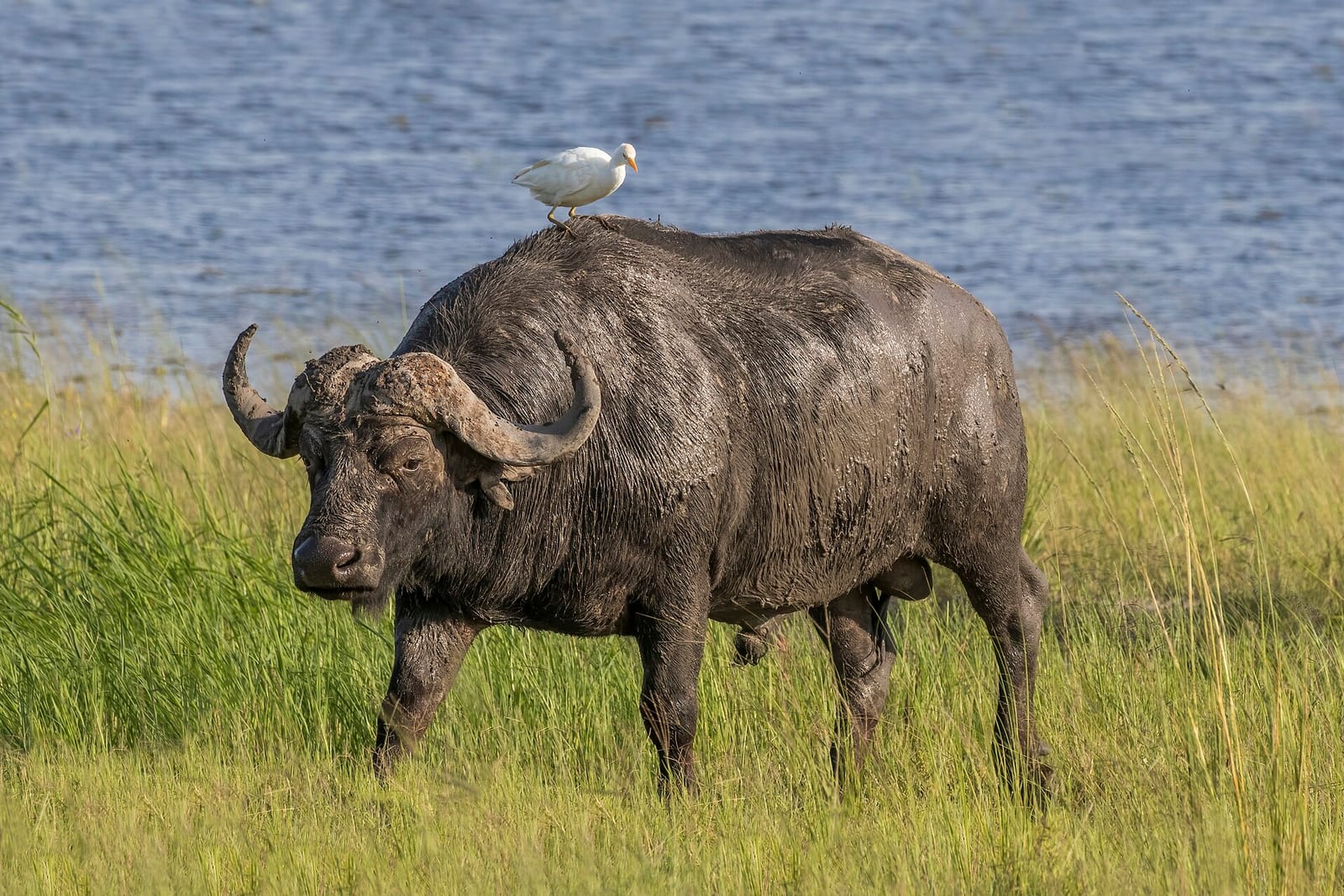
The buffalo earned its Big Five membership the hard way: colonial hunters rated it the most dangerous animal to follow into cover, and old bulls — “dagga boys”, crusted in mud, exiled from the herds — still carry that reputation. The boss of fused horn across a bull’s forehead can stop a rifle round; the memory behind it famously holds grudges.
Yet buffalo are also the savanna’s great socialists: herds a thousand strong moving like slow weather across the Mara, communally defending calves against lions in pitched battles that safari-goers occasionally witness — the origin of half the great campfire stories in Africa.
Where to see african buffalos in Kenya
Ubiquitous in every major park — the Mara for mega-herds on open ground, the Aberdares for forest bulls at The Ark’s waterhole after dark.
Masai Mara
The greatest wildlife arena on Earth
Tsavo East
Red elephants and infinite horizons
Tsavo West
Land of lava, springs and long views
Lake Nakuru
The rhino sanctuary on the pink lake
Aberdare
Kenya’s misty mountain kingdom
Meru
Where Elsa walked free
Amboseli
Giants beneath Kilimanjaro
Best time: Year-round; dry seasons stage the drama at shrinking waterholes, where herds, lions and dagga boys are forced into the same arena.
African Buffalo: frequently asked questions
Why is the buffalo in the Big Five?
The Big Five was a hunters’ list of the most dangerous animals to pursue on foot, and many old hands put buffalo first — a wounded bull circles back and ambushes its tracker. On safari today that history translates into respectful distance.
Are buffalo just wild cows?
Genetically they are true wild bovids, never domesticated — unpredictability is the species trademark. Their nearest relative is not your farm cow; treat every buffalo, especially lone bulls, as the serious wildlife it is.
Do lions really hunt buffalo?
Constantly — buffalo are a staple for big prides, but each hunt is a war: buffalo gore and trample lions, rescue herd-mates, and kill cats every year. Witnessing a full herd-versus-pride engagement is one of safari’s rarest spectacles.