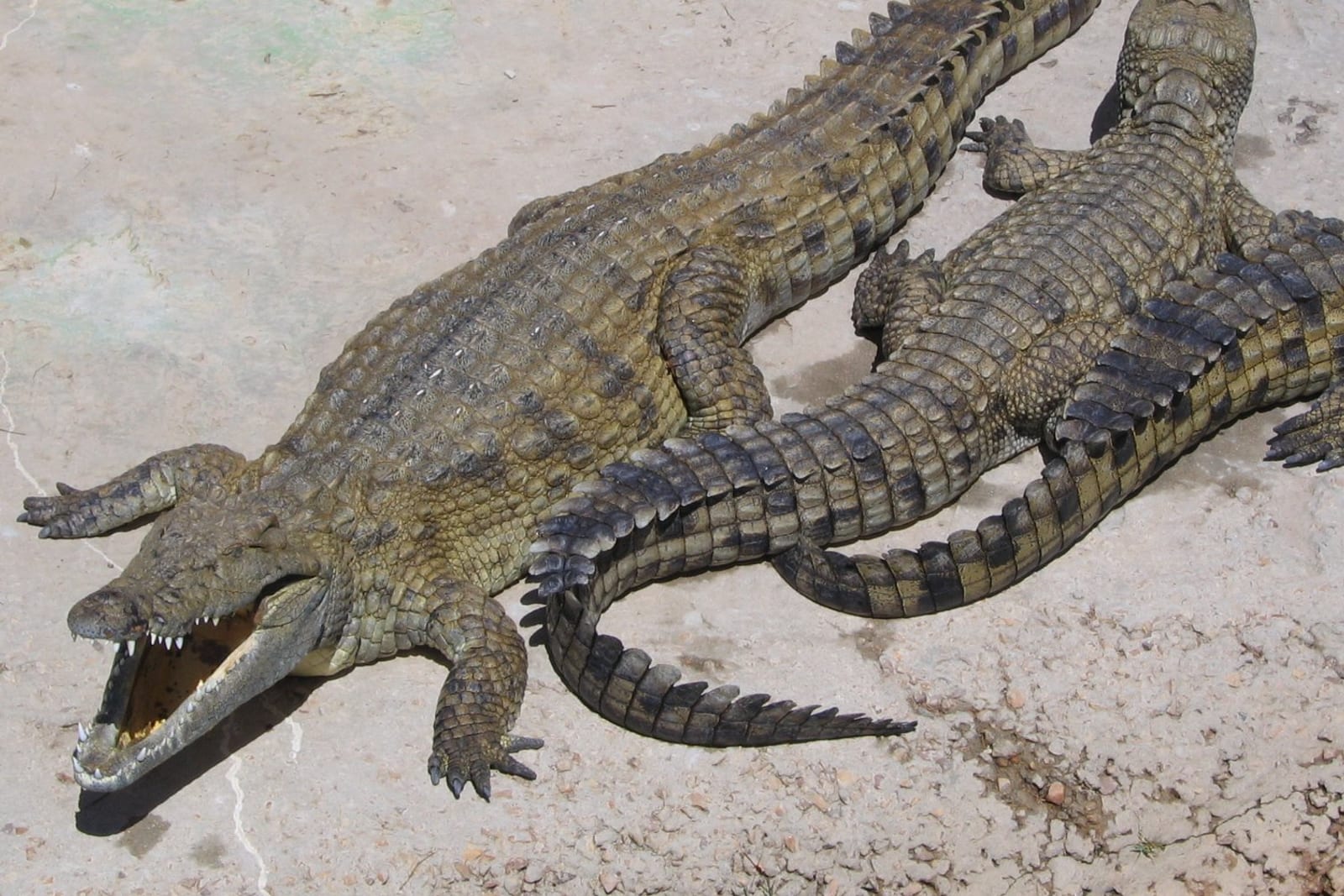
The Mara River’s crocodiles wait eleven months for a three-month feast. When the migration arrives, the river’s giants — some over five metres and possibly older than Kenya’s independence — position themselves below the crossing points for the only meal delivery service in nature measured in hundreds of thousands.
A crossing seen from the bank recalibrates your sense of the wild: the herds hesitating above ancient instinct, the logs that begin to glide, the sudden eruption. Away from the spectacle, crocodiles line every major river and lake in Kenya, unchanged in essentials for 90 million years — evolution’s most successful ambush ever designed.
Where to see nile crocodiles in Kenya
The Mara River’s crossing-point giants (Jul–Oct) are the headline; Mzima Springs’ chamber shows them underwater; every northern river sandbank has its sunbathers.
Masai Mara
The greatest wildlife arena on Earth
Tsavo East
Red elephants and infinite horizons
Tsavo West
Land of lava, springs and long views
Samburu
Wild north, different animals
Meru
Where Elsa walked free
Nairobi NP
Lions with a skyline
Best time: July–October at the Mara crossings for the hunting spectacle; year-round basking everywhere — crocodiles never leave.
Nile Crocodile: frequently asked questions
How big do Mara River crocodiles get?
The verified giants run past five metres and half a tonne — animals decades old that have survived every drought and eaten every migration since the 1960s. Size estimates beyond that belong to campfires.
Do crocodiles really wait a year between meals?
They can. A cold-blooded metabolism means a big croc gorging in migration season can idle through months of scarcity — one of the reasons the species outlasted the dinosaurs.
Are crocodiles dangerous to safari visitors?
Only if you give them water’s edge. In vehicles and at designated viewpoints, risk is nil; the actual rule that matters is never swimming or wading in rivers and lakes anywhere in safari Kenya, however calm they look.