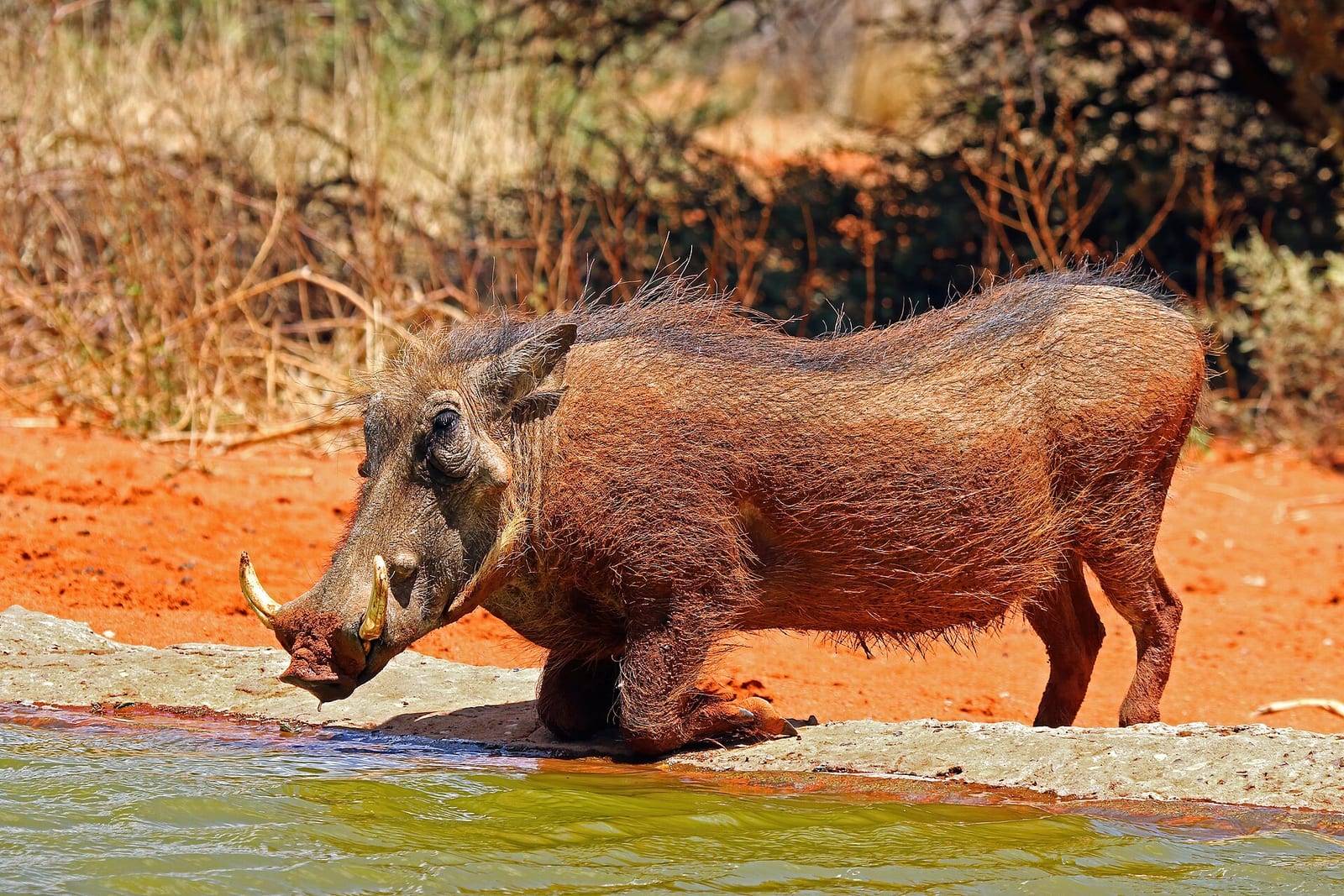
No safari animal delivers joy per kilogram like the warthog: the trotting family crossing the track, tails vertical like antennas, is the savanna’s guaranteed smile. Pumbaa earned Hollywood’s love honestly — warthogs really do have swagger, and their kneeling graze (padded wrists, working forwards on “elbows”) only helps.
The comedy floats on competence. Warthogs commandeer aardvark burrows and reverse into them at speed — tusks facing the door — leaving any pursuing lion to consider the geometry. Mud-wallowed, sun-armoured and utterly unbothered, they thrive in every Kenyan park.
Where to see warthogs in Kenya
Everywhere, gloriously. Camp lawns in the Mara often adopt a resident family mowing the grass between tents.
Masai Mara
The greatest wildlife arena on Earth
Amboseli
Giants beneath Kilimanjaro
Tsavo East
Red elephants and infinite horizons
Tsavo West
Land of lava, springs and long views
Nairobi NP
Lions with a skyline
Lake Nakuru
The rhino sanctuary on the pink lake
Samburu
Wild north, different animals
Meru
Where Elsa walked free
Hell's Gate
The park you explore on foot and by bike
Best time: Year-round, active by day — the rare animal that keeps safari hours.
Warthog: frequently asked questions
Why do warthogs run with tails up?
The favoured explanation is a flag for piglets following through tall grass — a family antenna convoy. Whatever the function, it remains safari’s most reliable comedy.
Are warthogs dangerous?
To lions retrieving them from burrows, genuinely — those lower tusks slash. To visitors in vehicles, zero; on foot, give a mother with piglets the respect any wild pig deserves.