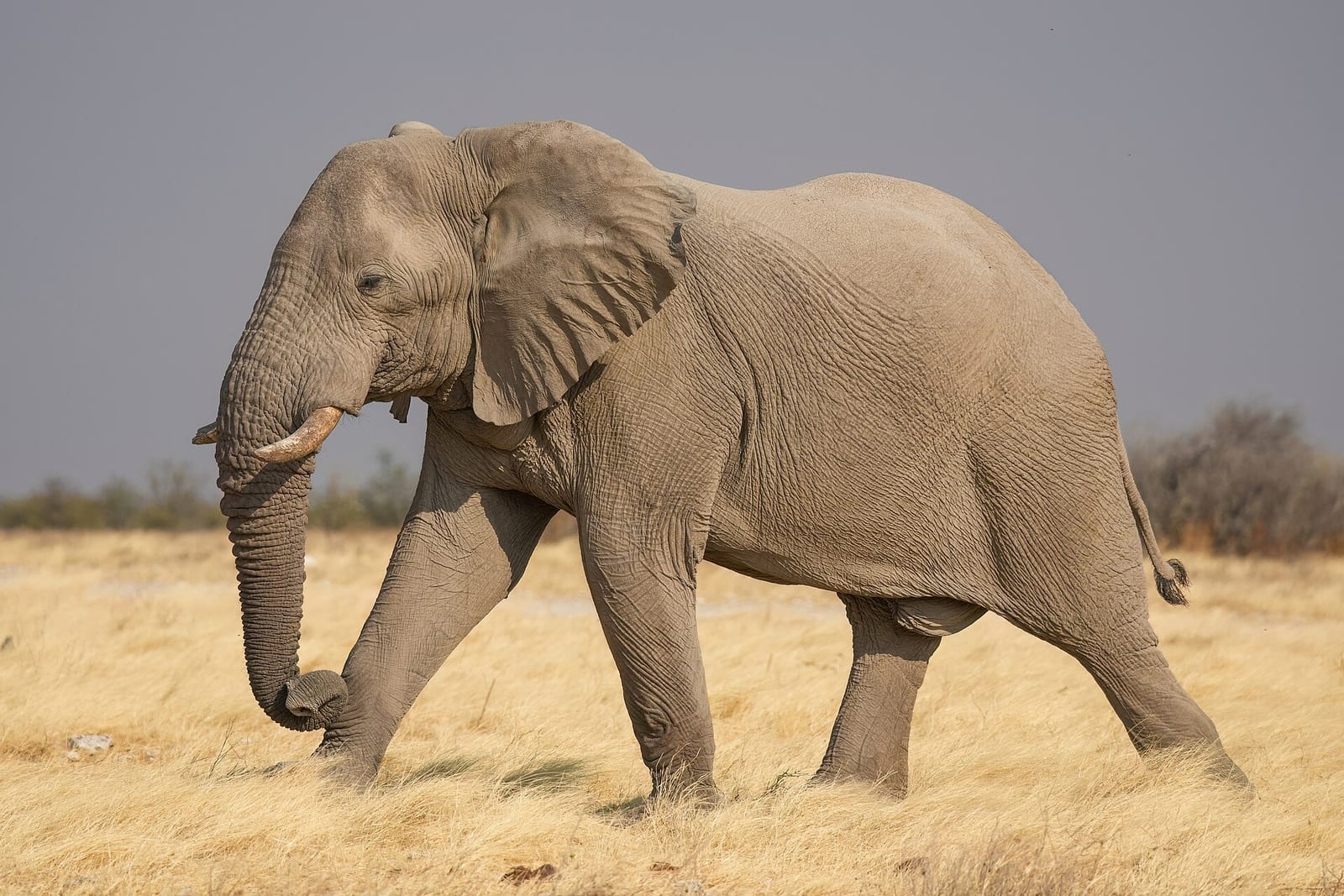
Kenya is elephant country of the first rank. Amboseli’s herds crossing the dry lakebed beneath Kilimanjaro are the most photographed elephants on Earth; Tsavo’s red-dusted giants roam Kenya’s largest wilderness; and Samburu’s families, studied by Save the Elephants for decades, greet researchers like old acquaintances.
The comeback matters as much as the spectacle: after losing over 80% of its elephants to the ivory crisis of the 1970s–80s, Kenya fought back — burning ivory stockpiles, hardening anti-poaching, and growing its population from around 16,000 in 1989 to more than 36,000 today. The last of the great “hundred-pounder” tuskers walk in Tsavo and Amboseli under named, individual protection.
Where to see african elephants in Kenya
Amboseli for close-range herds and Kilimanjaro backdrops; Tsavo for red elephants and big tuskers; Samburu for research-habituated families along the river.
Amboseli
Giants beneath Kilimanjaro
Tsavo East
Red elephants and infinite horizons
Tsavo West
Land of lava, springs and long views
Samburu
Wild north, different animals
Masai Mara
The greatest wildlife arena on Earth
Aberdare
Kenya’s misty mountain kingdom
Shimba Hills
Rainforest safari above the beach
Marsabit
A mountain of mist in the desert
Best time: Dry seasons (Jun–Oct, Jan–Feb) pull herds to swamps and rivers daily. In Amboseli the elephants commute into the swamps each morning and out at dusk — clockwork viewing.
African Elephant: frequently asked questions
Where is the best place in Kenya to see elephants?
Amboseli — herds of hundreds use the permanent swamps daily, tolerate vehicles at close range, and give you Kilimanjaro behind them. Tsavo holds Kenya’s biggest population; Samburu offers the most intimate river scenes.
What is a “big tusker”?
A bull (occasionally a cow) whose tusks exceed roughly 45 kg (100 lb) a side — ivory sweeping near the ground. Only a few dozen survive in all Africa, and the Amboseli–Tsavo ecosystem protects the largest share, monitored individually by the Tsavo Trust and Big Life.
Why did Kenya burn its ivory?
To kill the market’s legitimacy. President Moi’s 1989 burn of 12 tonnes in Nairobi National Park shocked the world into the ivory trade ban; the 2016 burn destroyed 105 tonnes. Kenya’s position: ivory has no value except on an elephant.
Are Kenya’s elephants still poached?
Far less than a decade ago — poaching has fallen to historic lows thanks to ranger networks, community conservancies and prosecutions. The bigger modern threat is habitat squeeze and human-elephant conflict on farm boundaries.