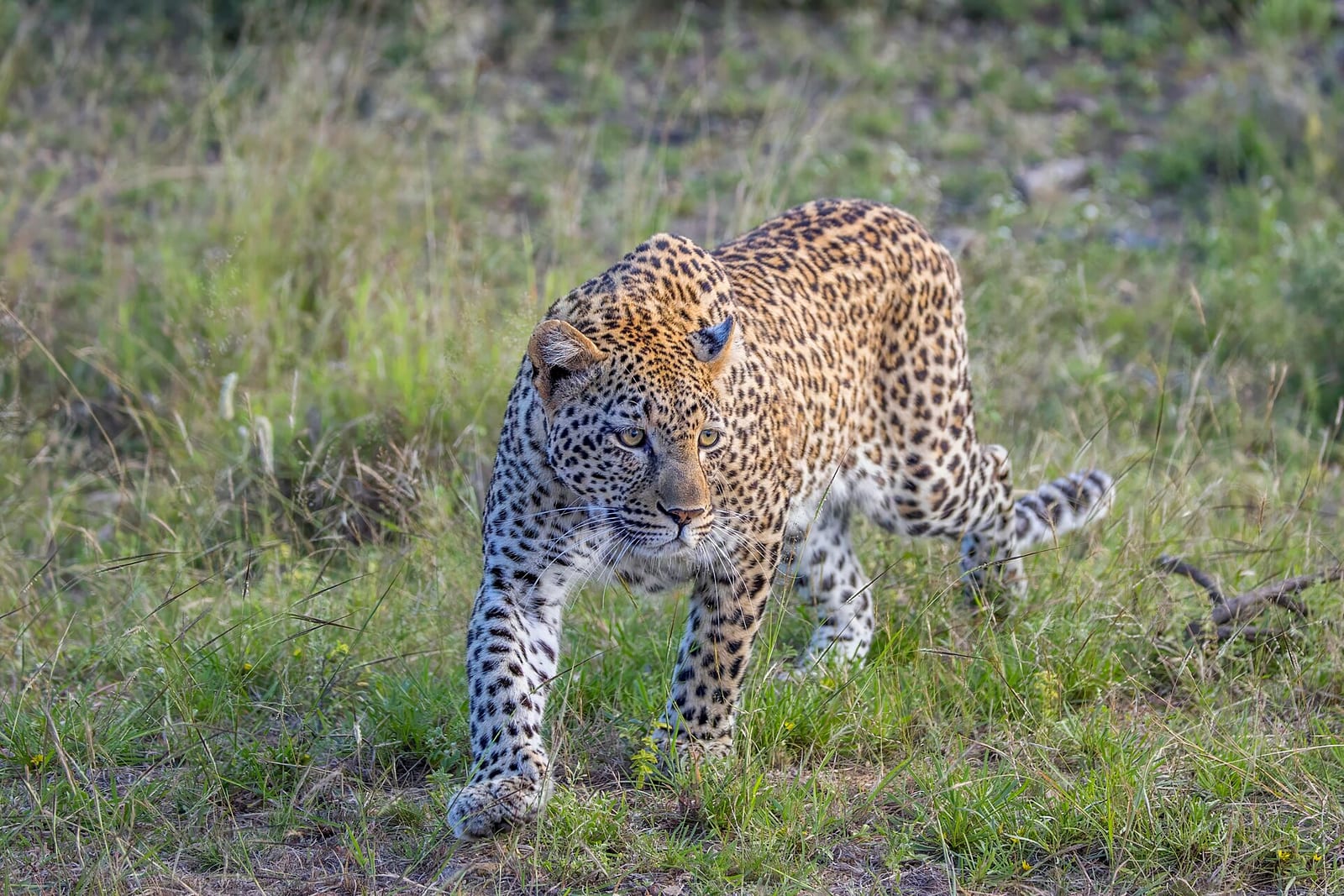
Every safari has a most-wanted list, and the leopard tops it. Solitary, silent and dressed in perfect camouflage, Africa’s most beautiful cat is also its most widespread — yet seeing one takes either luck or the right rivers. Kenya has the right rivers.
The Mara’s Talek and Ntiakitiak drainages, Leopard Gorge in Mara North (the BBC’s Big Cat Diary made its leopards global celebrities), and Samburu’s rocky lugga country produce some of the most relaxed leopard viewing in Africa. Guides read the signals — baboon alarms, a tail draped from a sausage tree, vultures ignoring a carcass stashed high — and the ghost becomes flesh.
Where to see leopards in Kenya
River forests are the key: the Mara’s watercourses and Samburu’s Ewaso Ng’iro produce daily sightings in good seasons; Lake Nakuru’s fever-tree forest is an underrated hotspot.
Masai Mara
The greatest wildlife arena on Earth
Samburu
Wild north, different animals
Lake Nakuru
The rhino sanctuary on the pink lake
Tsavo West
Land of lava, springs and long views
Meru
Where Elsa walked free
Aberdare
Kenya’s misty mountain kingdom
Best time: Dry seasons thin the cover. First light and the last hour before park closing are leopard hours; conservancy night drives (Mara North, Naboisho) add the cat’s true active window.
Leopard: frequently asked questions
How likely am I to see a leopard on a Kenya safari?
On a three-night Mara stay with a good guide, better than even — the ecosystem’s leopards are unusually tolerant of vehicles. Nothing is guaranteed with this cat; that is precisely its currency.
Leopard or cheetah — how do I tell them apart?
Leopards are bulkier with rosette-shaped spots and no tear marks; cheetahs are slim, small-headed, with solid spots and black tear lines from eye to mouth. Habitat helps: leopards haunt trees and thickets, cheetahs stand on open plains.
Why do leopards put kills in trees?
Insurance. A carcass wedged high in a fig or sausage tree is safe from lions and hyenas, letting the leopard feed for days. Scanning big riverside trees for dangling legs is a guide’s standard trick.