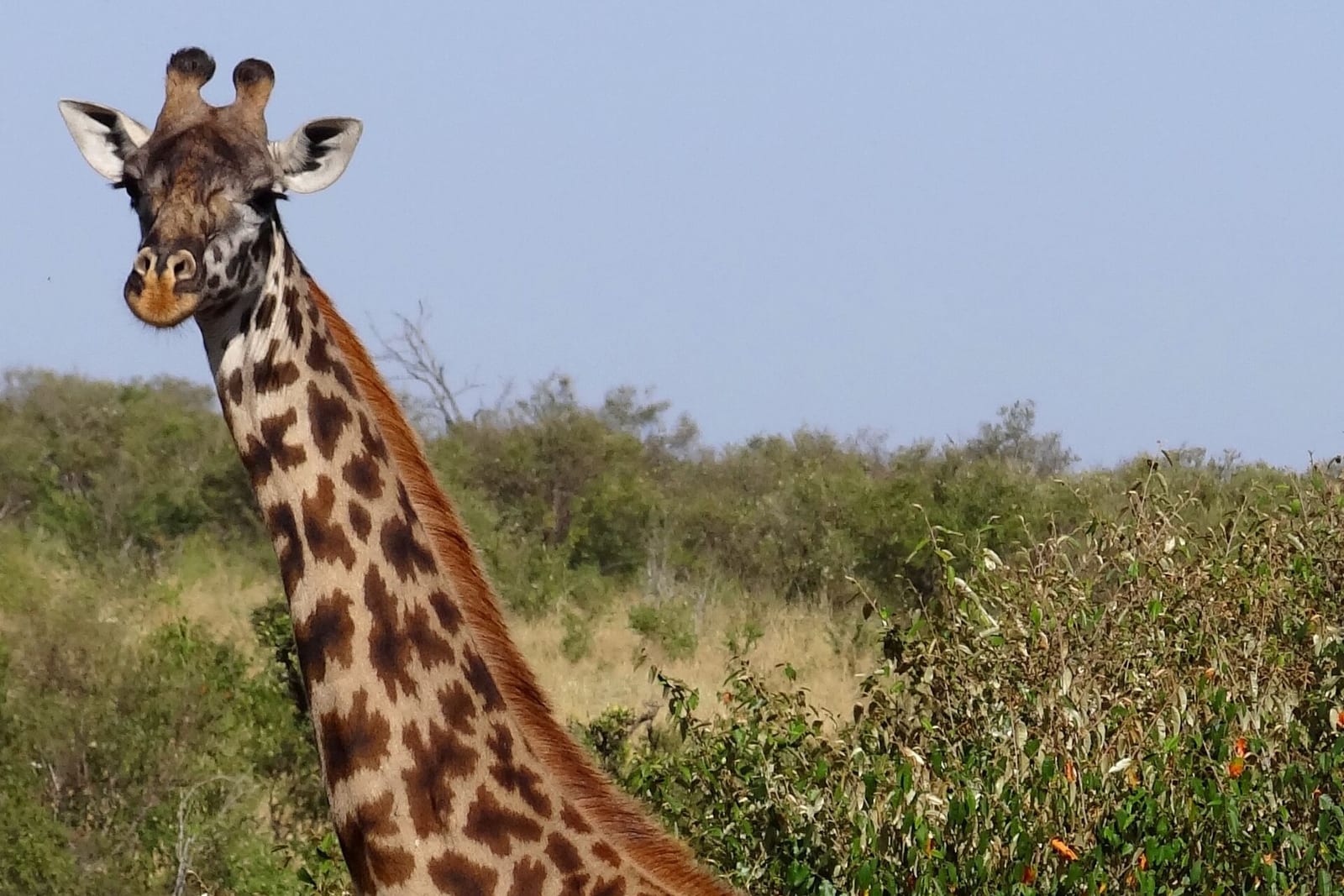
Kenya holds a distinction no other nation can claim: all three of East Africa’s giraffe types live here. The Masai giraffe, jagged-patched like oak leaves, browses the southern parks; the reticulated giraffe, wearing crisp white geometry, rules the north; and the pale-legged Rothschild’s giraffe survives in guarded pockets like Lake Nakuru and Nairobi’s Giraffe Centre.
Their quiet crisis crept past the world’s attention: Africa lost roughly 30% of its giraffes in three decades — a “silent extinction” — before conservation caught up. Kenya’s populations are now recovering under national strategy, and nowhere is watching a tower of giraffes cross open ground more beautiful than against a Mara sunset.
Where to see giraffes in Kenya
Masai giraffe throughout the south; reticulated in Samburu and Meru; Rothschild’s at Lake Nakuru and the Nairobi Giraffe Centre, where you can meet them at eye level.
Masai Mara
The greatest wildlife arena on Earth
Amboseli
Giants beneath Kilimanjaro
Tsavo East
Red elephants and infinite horizons
Samburu
Wild north, different animals
Lake Nakuru
The rhino sanctuary on the pink lake
Nairobi NP
Lions with a skyline
Meru
Where Elsa walked free
Hell's Gate
The park you explore on foot and by bike
Best time: Year-round — giraffes neither migrate nor hide. Golden hour turns them into the savanna’s best silhouettes.
Giraffe: frequently asked questions
What is the difference between Kenya’s giraffes?
Coat and country: Masai giraffes wear ragged, vine-leaf patches (Mara, Amboseli, Tsavo); reticulated giraffes wear neat white-lined polygons (Samburu, the north); Rothschild’s wear paler patches with white “stockings” (Nakuru, protected herds). Seeing all three needs just two parks and the Giraffe Centre.
Why do giraffes fight with their necks?
“Necking” is how bulls duel — swinging their heads like medieval maces into rivals’ bodies. Contests settle mating rights; the biggest swings can knock a rival off its feet.
Are giraffes endangered?
Both Masai and reticulated giraffes are formally Endangered after steep declines. Kenya’s counts are stabilising and Rothschild’s numbers have grown through translocations — a conservation story quietly going right.