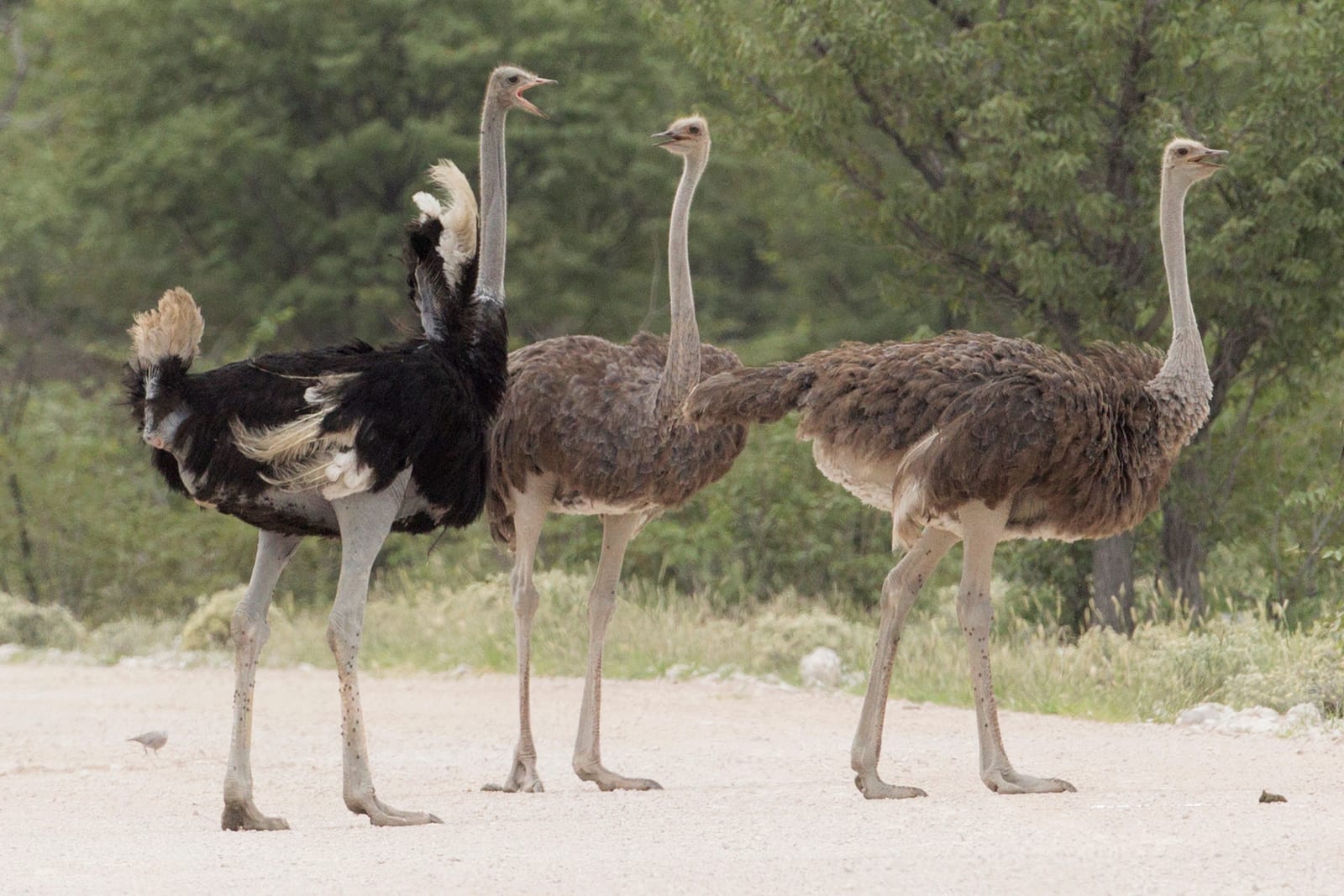
The world’s largest bird patrols Kenya’s plains like a feathered dinosaur — which is roughly what it is. A male Masai ostrich stands 2.5 metres, sprints at 70 km/h on two-toed legs that double as weapons, and guards a communal nest of eggs each weighing as much as two dozen hen’s eggs.
Kenya has a bonus for listers: two species. The pink-necked Masai ostrich struts the southern parks, while the blue-necked Somali ostrich — a full species of its own — holds the northern drylands around Samburu, completing that reserve’s “Special Five”.
Where to see common ostrichs in Kenya
Masai ostrich across all southern plains; Somali ostrich in Samburu and the north. Breeding males flush brilliant pink shins as advertisement.
Masai Mara
The greatest wildlife arena on Earth
Amboseli
Giants beneath Kilimanjaro
Tsavo East
Red elephants and infinite horizons
Nairobi NP
Lions with a skyline
Hell's Gate
The park you explore on foot and by bike
Samburu
Wild north, different animals
Best time: Year-round; the courtship season’s wing-fanning kantele dance is worth the front-row wait.
Common Ostrich: frequently asked questions
Do ostriches really bury their heads in sand?
Never — the myth comes from nesting birds lowering their heads flat to the ground to vanish against heat-haze. An actual threatened ostrich either runs (very successfully) or kicks (very seriously).
What is the difference between Masai and Somali ostriches?
Neck and range: Masai males show pink-grey necks and legs (south of the Tana), Somali males blue-grey (northern drylands). They were split into separate species — meaning Kenya safaris can tick both.