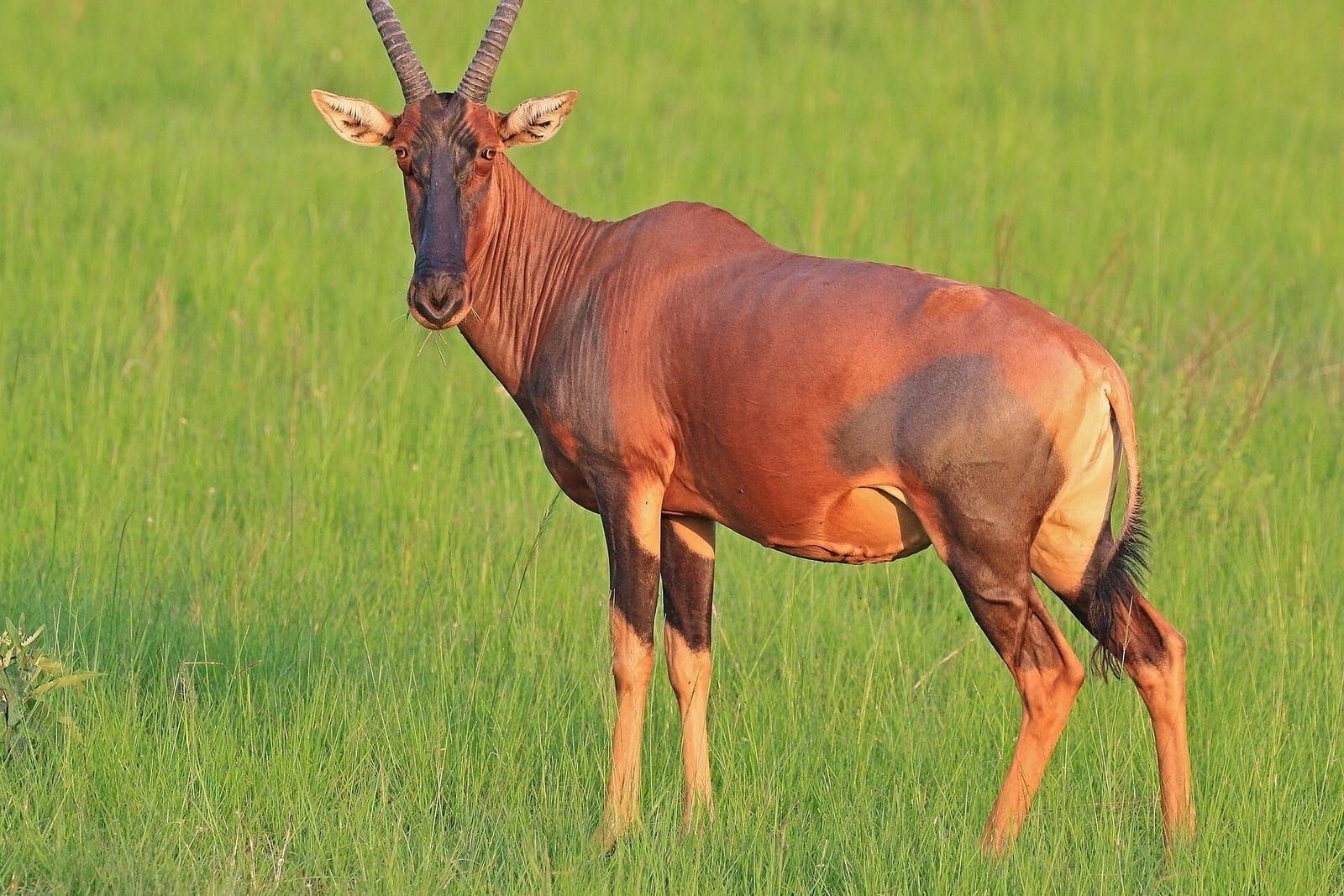
Every Mara photograph eventually includes one: a burnished antelope standing sentry on a termite mound, horns back, gazing over the plains like a general reviewing troops. The topi is the Mara’s signature antelope — glossy rufous coat with plum-blue thigh patches, as if wearing jeans — and its termite-mound habit is function, not vanity: elevation for spotting predators first.
Topi are among the fastest antelope alive and the plains’ early-warning system; when the topi stare, everything stares. In breeding season males hold miniature display territories — leks — where they snort, posture and clash for passing females in one of the grassland’s liveliest shows.
Where to see topis in Kenya
The Mara ecosystem is topi headquarters — abundant across the reserve and conservancies. Small numbers exist elsewhere, but this is their stage.
Masai Mara
The greatest wildlife arena on Earth
Best time: Year-round; the rut (roughly Feb–Mar) fills the leks with drama, and migration season pairs topi sentinels with passing chaos.
Topi: frequently asked questions
Why do topi stand on termite mounds?
Lookout duty and advertisement in one: height reveals stalking lions sooner, and for territorial males the silhouette broadcasts ownership. The rest of the plains reads topi posture as a security bulletin.
Is a topi the same as a hartebeest?
Close cousins with the same sloped build, but the topi is darker, glossier and blue-patched, while Coke’s hartebeest (kongoni) is plain tan with a longer face. Both favour open grassland; in the Mara you can compare them side by side.