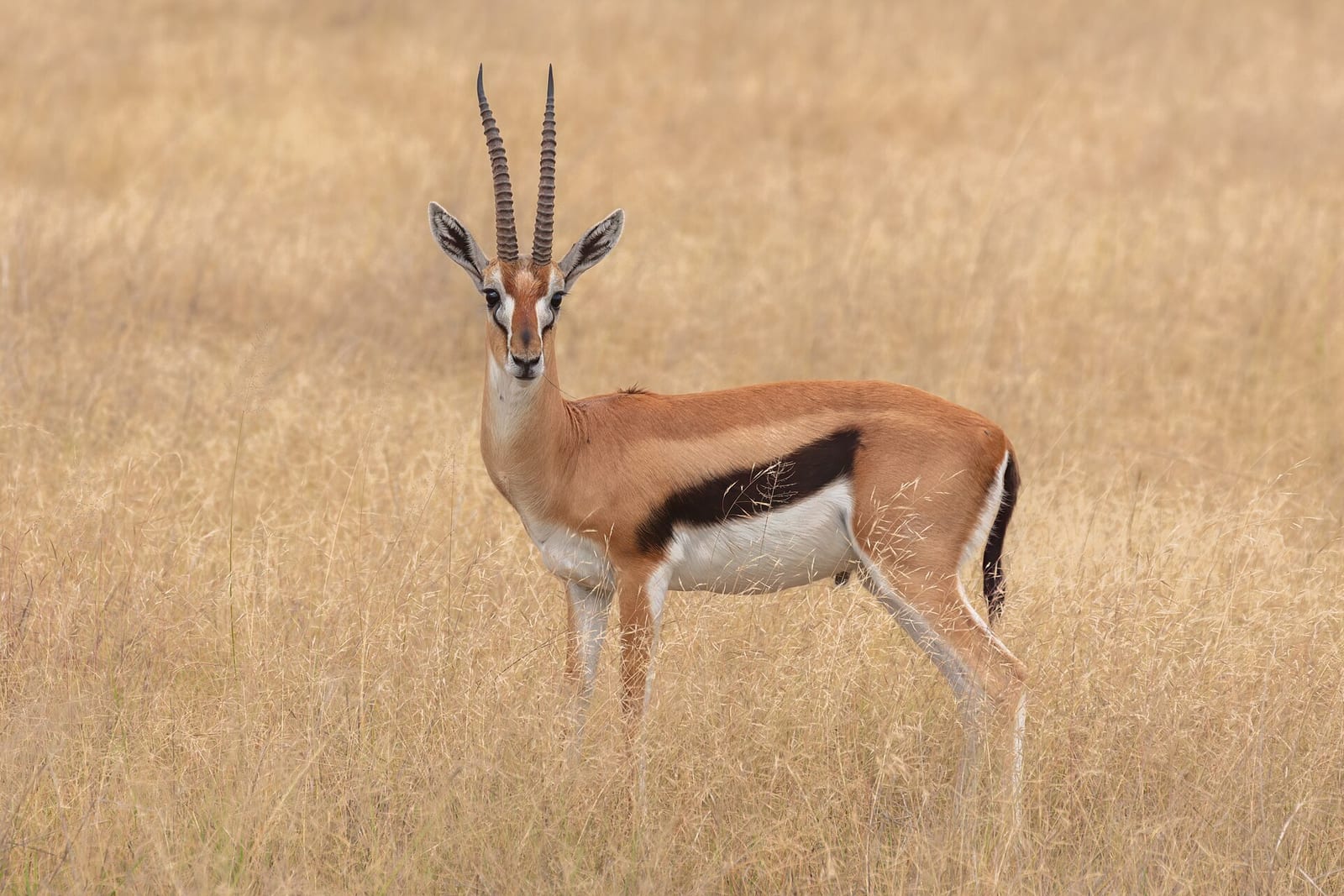
The “Tommy” is the savanna’s underrated centrepiece: a compact gazelle with a racing side-stripe, a perpetually wagging tail, and enough speed to make every cheetah hunt a fair contest. Hundreds of thousands accompany the Great Migration as its third army, mowing the lawn the wildebeest leave behind.
Watch long enough and you will see stotting — the strange four-legged bounce gazelles perform when predators appear. It is an honesty signal: “I am so fit that I can waste energy jumping; chase someone else.” Cheetahs, evidence shows, take the hint.
Where to see thomson's gazelles in Kenya
Ubiquitous on southern short-grass plains; the Mara’s tommy flocks are the engine of its cheetah viewing. Grant’s gazelle — larger, no side-stripe — shares every scene.
Masai Mara
The greatest wildlife arena on Earth
Amboseli
Giants beneath Kilimanjaro
Nairobi NP
Lions with a skyline
Hell's Gate
The park you explore on foot and by bike
Lake Nakuru
The rhino sanctuary on the pink lake
Best time: Year-round; fawning pulses after both rains fill the plains with wobbly newborns — and attendant predators.
Thomson's Gazelle: frequently asked questions
How do I tell Thomson's from Grant's gazelle?
Size and stripe: the smaller Tommy wears a bold black side-stripe and never stops wagging its tail; the taller Grant’s is paler, stripe-faint or absent, with white rump patches rising above the tail. They graze together across Kenya’s south.
Why do gazelles bounce like pogo sticks?
Stotting — a deliberately wasteful display proving athletic condition to a watching predator. Studies in the Serengeti-Mara showed cheetahs preferentially abandon hunts on strong stotters. Showing off, with survival value.